
The Five-Part Formula For a Successful Brand Launch

Brand Launch Ravenized (1)

The Art of Building a Brand Made to Scale

Building a brand is one of those tasks that seems fairly simple on the surface. You figure out some colors you like, some fonts that work, and you throw together a logo. Boom, a brand is born. Launch initiated. 

What happens next is one of three things. One, the brand launches and immediately flops. It is rare, but it happens. Two, it launches without a hitch and is wildly successful– also exceedingly rare. Or three, the most common outcome, the brand launches fine, sees some traction, and then slowly erodes until it’s just another yell into the void. 

Some brands hit the ground running and are an instant hit. They’ve got the look, the leads, and the longevity. But for every brand like that, you get five that are gasping for breath and dying for market space a year in. 

Let’s talk about the difference between a brand built to start and a brand built to scale, and the five-part formula to launching a successful brand. 

Part 1: The Plan

Building your brand and launching your business are two sides of the same coin. Before you buy a single business card, you need a plan.  Let’s look at two scenarios: 

Scenario One

Josie woke up on Monday with the fabulous idea that she was going to sell custom coffee cups with funny sayings on them. On Tuesday, she launched a simple template website. On Wednesday, she told all her friends about the business, and they bought her goods immediately. A massive success! 

By month two, the orders were scarce. By month three, she had more inventory than sales, and the bills were due. She shut down in a month.

Scenario Two

Josie woke up on Monday with the fabulous idea that she was going to sell custom coffee cups with funny sayings on them. She consulted a friend in marketing, and they ran some reports and discovered that competitors were selling similar products for a far smaller price point. They pivoted the brand to be more customizable and put a focus on being eco-friendly, and the brand thrived. 

The difference in the two scenarios is planning. Before you build a brand, you need to understand the kind of person who would want to buy from it. Where do they buy, what are their values, what is their life like?

In the first scenario, there are no thoughts, just vibes. In the second, Josie understood her hurdles, so her brand was better.

TL;DR

Before you do anything, make a plan that answers: 

Who wants what I am selling?

Why do they want it?

Am I able to sell this in a place and way that they would want?

Is my perfect customer looking for luxury? Education? Friendship? Sass? 

Who are my competitors? 

What makes my thing special?

Part 2: Find Your Voice

Brand voice is rarely ever the first tactical move people make. Humans are visual, we gravitate toward logos and colors. But before you can decide what you look like, you need to decide who you are.

Brand voice

What is Brand Voice?

Imagine your brand is a person, how would that person talk? That is brand voice. For brands like DuoLingo, the brand voice is smart, lighthearted, and sassy. Nike is motivational, empowering, and direct. Liquid Death is edgy and hardcore. You can imagine each brand having a conversation and know how they’d talk.
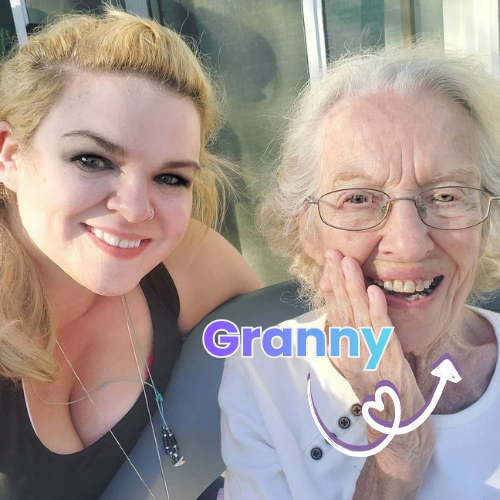
Raven Youngblood and her Grandma Rachel

How Do I Figure Out My Own Brand Voice?

Figuring out your brand voice is easiest when you imagine the brand as a real person. For example, if I were figuring out how Werther's Original Caramel would talk, I imagine my granny, who always had a bowl of them on the table. They would talk with warmth and a little bit of unintentional old-lady funny, like someone she would have coffee with on the porch. Ravenized brand voice is mostly mine, with a little more professionalism sprinkled in. It's conversational, smart, kind, helpful, and direct.


Start With What You Are Not

Deciding who you are might feel daunting, but you could likely tell me right now a few things you are not. Ravenized is not salesy. It doesn’t talk down. It doesn’t talk fluff. With that in mind, it is easier to decide how it does talk. 

Values & Anchor Words

Keeping your brand voice simple is important so you actually stick to it. Make sure your voice aligns with your values. I value honesty, understanding, and helpfulness above most other things, so that is how my brand talks. 

Your brand might value quality work and affordability, so your voice is going to be more reassuring and straight talking. Or maybe you value luxury and exclusivity and speak with a formal voice. 

When you’ve decided your values, pick five or six words that really resonate with them. These anchor words will help guide your voice when you talk as your brand without having to remember a whole elaborate guide. 

Approachable. Knowledgeable. Kind. Sassy. Passionate. (Some words I might use for my brand.) 

TL;DR

Once you have a plan, find your voice. Your brand voice is how your brand would talk if it were a person sitting right beside you. 

Part 3: Find Your Look

By this point, you know who they are. You know who you are. You know how they need to hear you, and you know how you will sound when you talk to them. Now you can do the fun part and build your visual brand. 

How do I pick my brand colors?

The reason you want to understand your customer and your voice before you pick your brand look is that those are the two biggest factors that will shape your look. If you’ve figured out you are a luxury brand and your clientele are fabulously wealthy older folks, bubble gum pink and neon yellow are probably not going to be a hit, but soft neutrals may resonate well.

Sometimes, your audience won’t give you a clear indication, though, and you have to look at colors and what they make you feel. For example:

blue

Blue

  • Feels like: trust, calm, reliability, stability
  • Used for: professional services, tech, finance
  • Watch out for: can feel generic without personality

Red

  • Feels like: urgency, passion, power, intensity
  • Used for: action, excitement, appetite, bold brands
  • Watch out for: can feel aggressive or stressful
yellow

Yellow

  • Feels like: optimism, happiness, energy, warmth
  • Used for: playful, friendly, approachable brands
  • Watch out for: too much can feel cheap and overwhelming

Make sure to stress test the colors you pick. Do they look good in print? On a website? Are they accessible to people with visual impairments? It is good to check your colors in a few applications before settling. 

When the Brand Colors Don’t Fit

You may not get your brand perfect in the first round. When Ravenized started, I wanted to be taken seriously, so I picked a gold and black palette. However, I work with small businesses, blue-collar clients, and authentic people you could have a drink with. My colors were too fancy for who I am. 

Then I went in the opposite direction. Neon pinks and purples and blues to reflect how different and fun and vibrant I am. 

It was a bit much and translated poorly into print. 

So now the Ravenized brand is a vibrant electric blue gradient, with the neon pinks and purples sprinkled in. There is a balance between professionalism and personality to it. 

It is okay to overhaul what doesn’t work, as long as you go back to step one when you do it.

What is important when I decide on a brand font?

Brand font has three aspects to consider: Does it look good, is it clear at any size, and can you find the font everywhere? 

There are tons of fun fonts out there, but it is always more important to be understood than to be funky. If you choose a fun font, it is typically smart to use it sparingly and have an “everyday” font for your primary. Cursive, bubble letters, abstract– they all might pass “does it look good,” but the second two questions won’t fly. 

Write your brand name in your font, hold it at arm’s length. If you can read it easily, it is probably good. If you can’t, better pick something else. 

And lastly, if Canva, WordPress, and Google Docs don’t have the font on lock, I am not using it. A font family where you have every kind of bolding available, and it’s always in common places, will save you a headache down the road. 

What are the best practices for my logo?

The first best practice is to let an expert do your logo. Seriously. There is a reason logos are a marketing specialty. This is your face. If you invest in marketing nowhere else, invest here. 

However, if you are really confident in your logo-prowess, some rules to avoid a headache down the road are: 

  • Make it work in black and white first 
  • It should be able to be the size of a thumbnail or the size of a billboard and still work 
  • Fonts should be clear at any size 
  • A stranger should be able to recognize it in two seconds or less (So less is more)
  • Look at it from every angle to make sure it looks good (from experience, I’ve seen a logo that looked like a hate symbol when it was upside down and a logo that looked, uh, x-rated when it was put on its side. Check. Every. Angle.)
AI Logo vs Human logo

Can I just have AI build me a logo or make it in Canva?

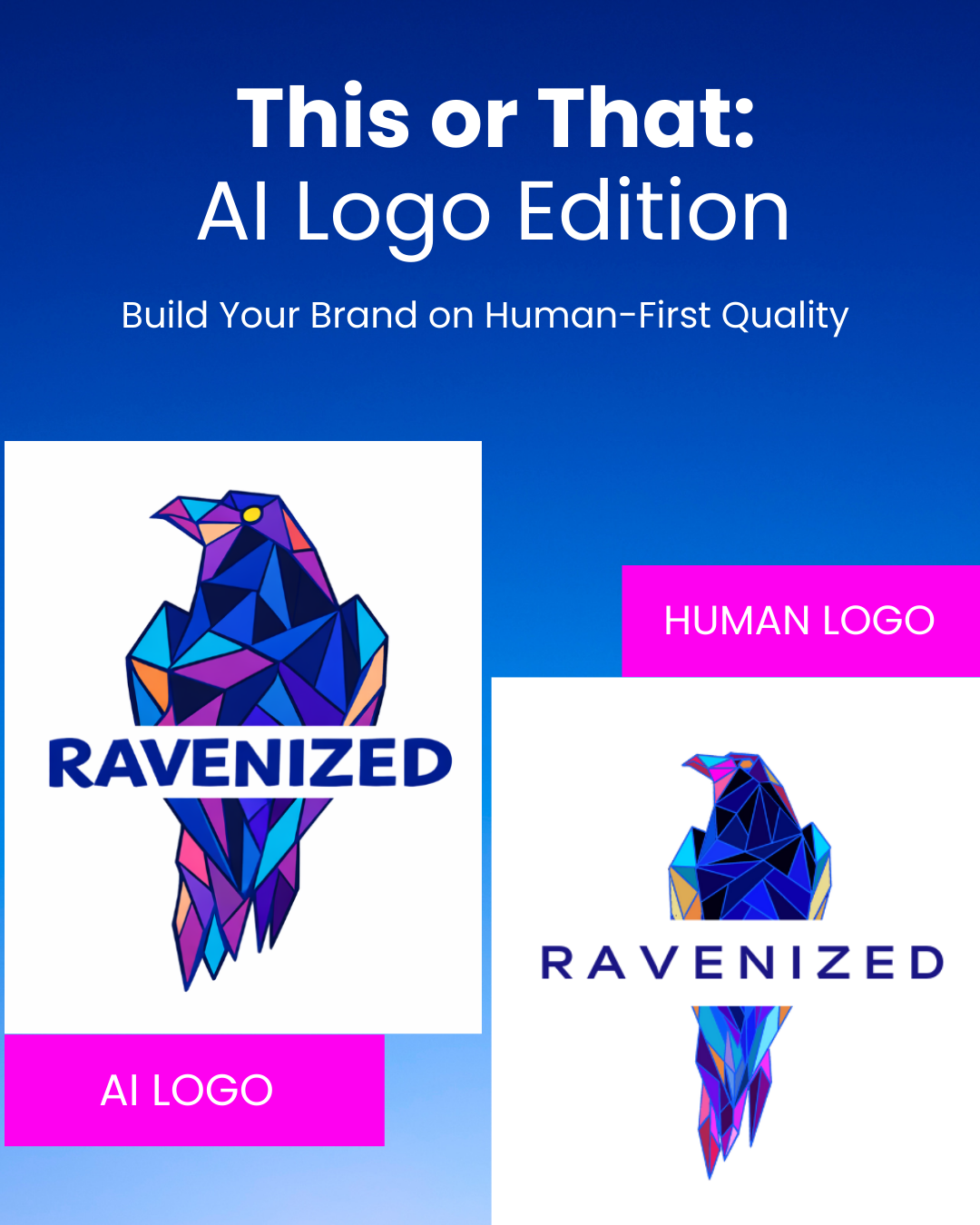
No. I will not explain further. Just no. Okay, I will explain further. When I started specializing in marketing for home services, I began to notice, really quickly, that all roofers should be grounded from Canva. I challenge you to look up “roofer near me” and find one that does not have some variation of this house, with these incorrectly placed windows. You are not everyone else; you want to be recognizable and unique. Don’t do it. On the AI side, there is a quality issue. Lines are uneven, and they scale poorly. They look like AI slop. I am not saying you can’t be successful with an AI logo, but 86% of people recognize AI art, and nearly 40% of them don’t trust it. No quality, no trust = Uphill battle in branding. Plus it looks like this.

Part 4: Measure Twice, Cut Once

The biggest difference in the brands that launch successfully and the ones that fizzle out is intentional execution. 

When you have your plan, your voice, and your visuals, take the time to create with them while it is all fresh. Make your email signatures, your truck wraps, your tee-shirts, business cards, flyers, social media headers, first blogs—do it all before your launch, and you’ll immediately gain more ground and authority than you ever could doing it here and there. Launch with the intent to scale, not the intent to open.

Part 5: There Is No Such Thing as Set It and Forget It

Plan, Voice, Look, Launch. You are off to the races! But you are not done. This stuff is all foundational. Your brand isn’t just about what marketing does. It’s about what every single aspect of your company does. You can have the best marketing and best brand in the world, and one rude salesperson can sink the ship. You can have all the best of sales and marketing, and a band of disgruntled employees can bring you low. Think CEO at a Coldplay concert. 

All of it–internal and external– builds your brand. After launch, you need to make sure everyone understands the values of the brand. Make sure you are measuring where your name is showing up, who recognizes you, and what they think of you. 

Brand launch is just the start. Don’t launch and leave it.

Putting it All Together

The difference between success and failure in a brand launch boils down to intention verses a patchwork build. It boils down to:

  1. Make a Plan
  2. Find Your Voice 
  3. Find Your Look
  4. Execute with Intention 
  5. Keep Going 

With that formula, you are well on your way to having a brand you can scale and a brand that takes on the market faster and better.

Sound Like a Lot of Work?

Yeah, we agree. But it’s our favorite kind of work, and we are good at it. Get in touch if you want to talk with us about building out a brand that rises above the noise.

Frequently Asked Questions About Successful Brand Launches

What is the most important step when launching a new brand?

The most important step is creating a clear plan. Before choosing colors or a logo, you need to understand your audience, competitors, and what makes your brand different.

Why do some brands fail after a strong launch?

Many brands fail because they launch without a long-term strategy. They may get early traction, but without clear positioning and consistency, they lose momentum over time.

What is brand voice and why does it matter?

Brand voice is how your brand would talk if it were a person. It matters because it builds trust, creates consistency, and helps your audience connect with you.

How do I figure out my brand voice?

Start by defining your values, identifying what your brand is not, and choosing a few anchor words that describe how you want to sound. Then apply that tone consistently across everything.

Should I choose my brand colors before defining my audience?

No. Your audience and positioning should guide your visual choices. Colors should reflect the emotions and expectations of the people you want to attract.

What emotions do brand colors create?

Colors trigger emotional responses. For example, blue often conveys trust, red signals urgency or energy, and yellow feels optimistic and friendly. The right color depends on your brand’s goals and audience.

A strong logo is simple, recognizable, scalable, and works in black and white. It should be easy to identify quickly and usable across all platforms and sizes.

While you can, it often leads to generic or low-quality results. A custom logo helps your brand stand out and builds trust with your audience.

What does “launching with intention” mean?

It means preparing all of your brand assets, like your website, social profiles, materials, and messaging, before going live so your brand shows up consistently from day one.

Is branding a one-time project or an ongoing process?

Branding is ongoing. After launch, you need to maintain consistency, monitor how people perceive your brand, and make adjustments as your business grows.